


17th September 2026
How Do Flexible LED Screens Follow Curved Spaces?
-
 author

A flat LED wall is easy to draw, but many retail interiors, atriums, museums, and branded façades are not flat. The useful question is not whether a flexible panel can bend. It is whether the bend, service access, image quality, and support structure will remain predictable after installation. This article explains how to judge that fit before a curved concept becomes an expensive compromise.
The Shape of the Site Determines the Display Approach
The site geometry should lead the decision because a screen that looks right in elevation can fail at edges, joints, or service points. A flexible LED screen is useful when the installation surface has a defined curve or irregular outline.
Record the actual surface, usable dimensions, viewing positions, obstacles, and technician access. Those measurements determine whether flexible panels, curved cabinets, or smaller rigid sections can be installed reliably.
| Site condition | Flexible approach | Point to confirm |
| Single, gentle arc | Curved modules or flexible panels | Minimum radius and support spacing |
| Tight cylinder or column | Flexible or soft-connected modules | Seam continuity and cable clearance |
| Mixed curves and corners | Custom-shaped sections | Transition geometry and service access |
| Flat wall with one feature curve | Hybrid rigid and flexible layout | Joint alignment between systems |
Radius Is a Mechanical Limit, Not a Design Suggestion
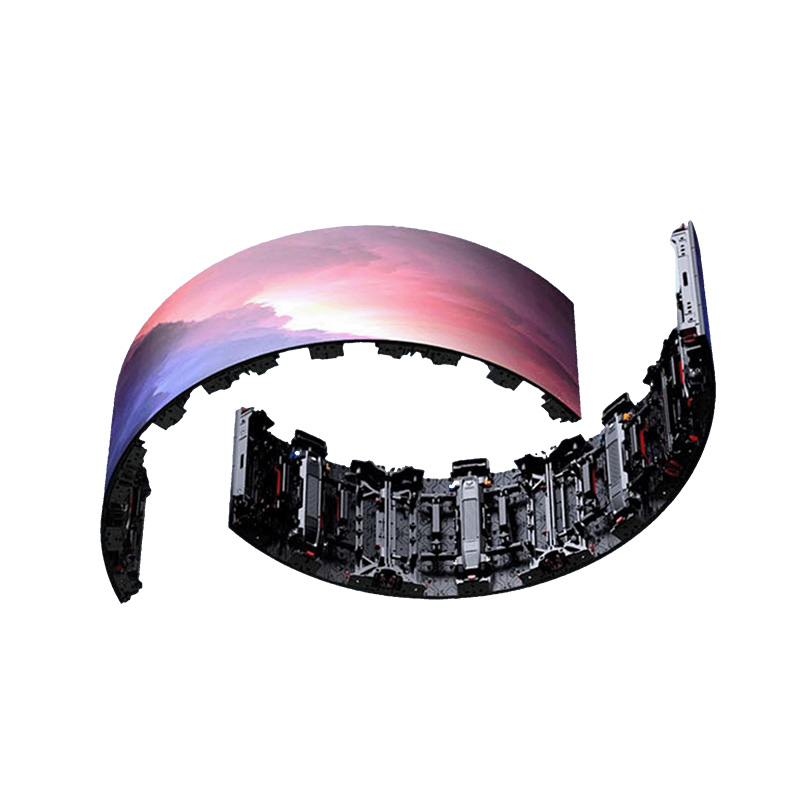
Every flexible LED display has a specified bending range that should be treated as a mechanical limit. Exceeding it can create stress, uneven seams, or component damage. Check the radius against the complete assembly, including the surface, fasteners, cables, and protection.
“Curved” can describe very different outcomes. A broad arc may use curved cabinets, while a tight column may require a soft connection and a different support method. The measured geometry—not simply the fact that a design is described as “curved”—should determine which LED display structure is appropriate.
Flexible Modules Solve Specific Visual Problems
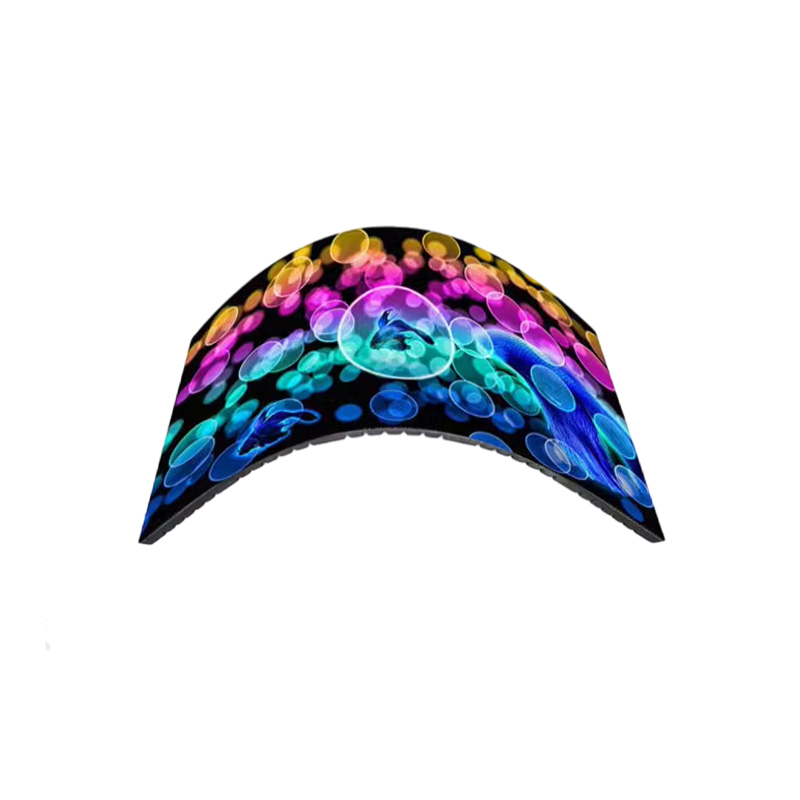
A flexible LED display is useful when the display surface needs to follow changing architectural contours. Soft-wired connections give modules more freedom to follow curved or irregular surfaces than fully rigid assemblies, helping maintain more consistent alignment between sections.
The benefit is strongest when the display is part of the space, such as a curved reception wall, wrapped column, or sculptural feature. The design still needs stable backing and a clear replacement route.
Flexible Connections Still Need Careful Installation
Soft-wired connections still require organized cable routing, adequate strain relief, and clear identification. Poor cable management can place unnecessary strain on connectors, complicate servicing, and increase the risk of unstable signal or power connections.
Review these controls before approval:
- Mark the bending direction and minimum radius on the drawing.
- Allow sufficient cable slack so movement does not place tension on the connectors.
- Define the support structure so the LED modules are not used as load-bearing elements.
- Maintain a clear access path for module replacement behind trim or surrounding fixtures.
- Test the tightest radius and most visible seam.
These controls make flexibility repeatable instead of a last-minute site adjustment.
Image Quality Depends on More Than the Curve
Final image quality depends on pixel pitch, viewing distance, calibration, processing, content, and geometry. Close viewers may notice seams that disappear at longer viewing distances, while cameras may reveal refresh-rate or scan-related artifacts that are not obvious to the eye.
A Curved Screen Still Needs a Consistent Calibration Reference
Calibration begins with a repeatable reference. Verify module order, pixel mapping, receiving-card configuration, and brightness consistency before evaluating the curved installation. A rotated or mis-mapped section can be harder to diagnose across changing angles.
Use the same test content in the workshop and at handover. Neutral gray test patterns can reveal brightness mismatches, dark gradients can expose low-level uniformity issues, and fine text can help identify mapping or alignment errors. Test from principal viewing positions, including the sides.
When a Custom Shape Is Better Than a Continuous Bend
A special shaped LED display is a better fit for circles, spheres, right-angle transitions, or a changing outline that one bend cannot follow. The process begins with accurate drawings and a clear division between display surface, frame, and building structure.
BLC LED offers flexible and creatively shaped display systems for applications such as arcs, circles, columns, spheres, and cube-like structures.
A Hybrid Layout Can Reduce Risk
A hybrid layout can reduce complexity when only part of the wall requires a curved display. Rigid cabinets can cover the flat sections, while flexible or custom-shaped modules are used only where the geometry requires them.
Test the boundary between systems. Confirm pixel pitch, cabinet depth, calibration, viewing angle, and service access so the transition remains visually and mechanically consistent.
A Practical Approval Path for Curved LED Projects
Approval should answer four questions: What is the exact geometry? Which construction stays within its mechanical limits? How will the image be tested? How will a technician replace a failed module? Keep a concise approval package containing the measured drawing, radius map, support concept, cable routes, service clearances, and test results.
The Right Flexible Display Follows the Site and the Workflow
The right flexible display should follow the measured geometry without creating a difficult maintenance routine. Flexible modules are well suited to predictable curves, custom-shaped sections work better for changing outlines, and hybrid layouts can reduce the amount of specialized construction required. Review geometry, support, service access, and image testing together; the wider range of LED display solutions can then be considered with a clear brief.
FAQ
What Is a Flexible LED Screen Used For?
A flexible LED screen is used where the display needs to conform to a curved, cylindrical, or irregular surface. It is especially useful for architectural features, retail interiors, exhibitions, and branded spaces where a flat rectangle would leave gaps or break the intended form.
How Do I Know Whether the Curve Is Too Tight?
Measure the smallest radius in the complete installation and compare it with the approved bending range of the selected panel or cabinet. Include the backing, connectors, cable movement, and fixing method in that check. Never treat a visual mock-up as proof of mechanical compatibility.
Are Flexible LED Displays Suitable for Outdoor Use?
Suitability depends on the specific product’s protection rating, materials, brightness, thermal design, and installation method. An indoor flexible LED display should not be assumed to meet outdoor conditions. Confirm the environmental specifications and support details for the intended site.
What Should Be Tested Before Handover?
Test the complete signal chain with gradients, fine text, dark content, motion, and neutral gray. Check seams from the main viewing zones, verify mapping and calibration, and perform a trial module replacement while the final access route is still available.


Leave a reply