LEDディスプレイはどのようにして映像を光に変換するのか?

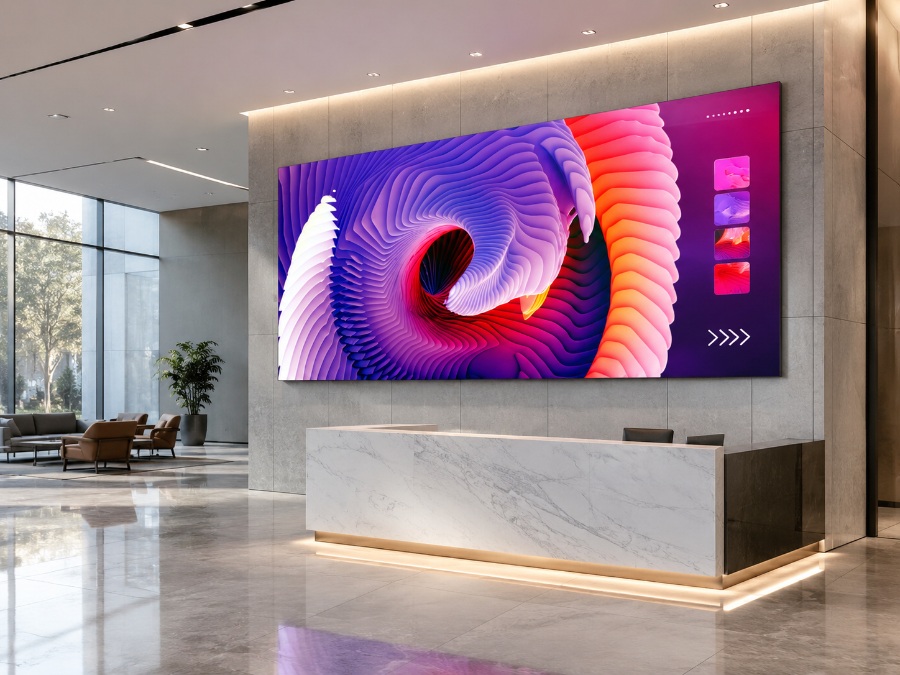
購入者はLEDウォールに映し出された鮮やかな画像を見ることはできますが、その背後にある意思決定のプロセスを理解することはできません。そのプロセスを理解することで、スクリーンを謎めいたブラックボックスとして扱うことなく、コンテンツ、視聴距離、サービスアクセスなどをより簡単に指定できるようになります。 画像はマッピングされたピクセルデータとして始まる LEDディスプレイはビデオソースから始まりますが、プロセッサが画像を物理的なピクセルレイアウトにマッピングするまでは、そのソースを表示することはできません。ノートパソコン、メディアプレーヤー、カメラ、またはコントローラは、コンテンツをプロセッサに送信します。ビデオプロセッサと制御システムは、入力された画像を拡大縮小して画面キャンバスにマッピングします。受信カードは、マッピングされた表示データを対応するモジュールに分配します。 そのため、LEDディスプレイ画面は、実際のコンテンツと想定される画面サイズに基づいて発注する必要があります。広いウェルカムウォール、ステージの背景幕、狭い情報ストリップなど、いずれもLEDを使用することはできますが、それらのマッピングやコンテンツの優先順位は最初から異なります。 各ピクセルは、制御可能な3つの色を混合します。 各フルカラーピクセルは、赤、緑、青の光源を使用します。コントローラーは、画像内のその位置に必要な色と明るさを作り出すために、これらの光源の相対的な出力を調整します。白い画面では、3つのカラーチャンネルすべてが協調して光を照射する必要がありますが、濃い青色のシーンでは全く異なる組み合わせが必要です。何百万もの組み合わせを制御することで、ビデオ、文字、グラフィックの表示が可能になります。 ピクセルピッチとは、隣接するピクセル間の中心距離のことで、視聴者が画像構造に気づく前にどれだけ近づいても構わないかに影響します。ピッチが小さいほど、より近い位置で細かいディテールを表示できますが、それはメッセージが本当にそのディテールを必要とする場合にのみ有効です。重要なのは、どの数値が最小かではなく、人々が何を読み取る必要があるかということです。 キャビネットは信号電源とアライメントを伝送します ディスプレイモジュールは、完成した壁面を構成する要素の一つに過ぎません。キャビネットは、電源、受信ハードウェア、モジュール、信号接続部などを収容し、機械的な構造と位置合わせを行う役割を担います。これにより、複数のモジュールが一体のディスプレイとして動作することが可能になります。キャビネットのラインがずれていたり、信号経路が正しく構成されていなかったりすると、技術的に優れたモジュールであっても、鮮明で連続的な表示を実現することはできません。 そのため、LEDビデオウォールパネルは、単体のタイルとしてではなく、システムとして計画されます。コンテンツテストを意味のあるものにするためには、設置チームがキャビネットのレイアウト、コントローラーの容量、ケーブル配線、電気的保護、そして将来の保守のための実用的な経路を確認する必要があります。 ステージ 何が起こるのですか プロジェクトチームがなぜ気にする必要があるのか コンテンツ入力 ソースはビデオまたはグラフィックコンテンツをプロセッサに送信する。 ソースの解像度とアスペクト比は、拡大縮小とテキストの鮮明さに影響します。 処理 プロセッサは、すべてのフレームを画面上の実際のピクセルキャンバスにマッピングします。 適切なマッピングを行うことで、画像の切り抜き、ロゴの引き伸ばし、テキストの誤配置を防ぐことができます。 受信 受信カードは、マッピングされたデータを各キャビネット内のモジュールに分配します。 計画された信号経路は、技術者が壁の他の部分に影響を与えることなく、故障箇所を特定するのに役立ちます。 光出力 赤、緑、青のLEDが、目に見えるピクセルカラーを生成します。 明るさとピクセルピッチは、部屋の環境と最も近い視聴者に合わせて調整する必要があります。 リフレッシュにより動きの一貫性が保たれる リフレッシュレートは、LED駆動システムが光出力を更新する頻度を表し、フレームレートは、新しいビデオフレームが供給される頻度を表します。リフレッシュレートは、動きの速いコンテンツや、LEDスクリーンをカメラで撮影する場合に特に重要になります。リフレッシュレートは、フレームレート、コンテンツの準備、信号処理、キャリブレーション、周囲光、ディスプレイの物理的状態などと並んで、画質を構成する要素の一つです。 したがって、フルカラーLEDディスプレイは、実際に再生するコンテンツで評価する必要があります。ゆっくりとした案内表示コンテンツでは、レイアウトの問題やコントラストの選択ミスが露呈する可能性があります。一方、高速な製品映像では、スケーリングの不備や信号経路の弱さが明らかになる可能性があります。ループ再生によるデモだけに頼るよりも、引き渡し前に両方のタイプのディスプレイをテストする方がはるかに効果的です。 単一のモジュールは同期を保つ必要がある LEDディスプレイパネルは、隣接するパネルと同期して正しいタイミング情報と色情報を受け取る必要があります。そうでない場合、画像の一部が欠落したり、タイミングが不整合になったり、色が不一致になったりする可能性があります。一方、物理的な継ぎ目は、主に筐体の配置と平面度によって制御されます。したがって、試運転では、個々のモジュールのチェックだけでなく、画面全体のテストを実施する必要があります。これが、ディスプレイ全体が1つの面として機能していることを確認する最も簡単な方法です。 鑑賞環境が全体像を完成させる 同じスクリーンでも、日陰のロビーでは鮮明に見えても、明るいガラス張りの窓際では見づらく感じることがあります。これは、周囲の光によって知覚されるコントラストが変化するためです。視野角、表面の反射、そして通常の歩行経路も、視聴者の視覚体験に影響を与えます。こうした条件は、ハードウェアの選択と同様に、コンテンツの階層構造を決定する上で重要な要素となります。 最も近い現実的な視位置から、最も重要な最小のテキストをテストしてください。 静止画像をチェックして、マッピングを受け入れる前に、モーションクリップとライブソースを確認してください。 電源、信号、およびサービスへのアクセス状況を、運用チームのために文書化しておくこと。 プロジェクトで大きな連続したキャンバスが必要な場合、業務用LEDディスプレイは、それらの決定事項を1つの画面に集約することができます。BLC LEDの屋内固定設置オプションには、高精度なキャビネット構造と前面サービス構成が含まれており、構築空間において正確な位置合わせと実用的なメンテナンスアクセスを両立させるのに役立ちます。 テクノロジーを読み解くための実践的な方法 LEDウォールは、マッピングされたデジタル情報を数百万ピクセルの位置で制御された光に変換することで機能します。次の重要なステップは、このシンプルな原理を設置場所に適用することです。つまり、実際のコンテンツを定義し、最も近い視聴者を特定し、物理的なキャンバスを確認し、ウォールのメンテナンス方法を計画します。この手順を踏むことで、プロジェクトが仕様策定作業に陥ることなく、テクノロジーがメッセージを伝えるために役立つようになります。 よくある質問 すべてのLEDピクセルには、赤、緑、青の光が含まれていますか? フルカラーディスプレイは、赤、緑、青の光源を用いて可視ピクセルの色を生成します。パッケージデザインは製品や用途によって異なります。 ピクセルピッチはどのように変化するのですか? ピクセルピッチとは、ピクセル間の間隔のことです。これは、特定の視聴距離でどれだけのディテールが知覚できるかに影響するため、視聴者にとって最も近い適切な視聴位置に合わせる必要があります。 なぜビデオプロセッサが必要なのですか? プロセッサは入力されたコンテンツを画面の物理的なピクセルキャンバスに合わせて調整し、制御システムはマッピングされたデータを対応する表示セクションに分配する。 同じLEDウォールでライブ映像とグラフィックの両方を表示できますか? はい、ソース、プロセッサ、マッピング、およびリフレッシュ性能が目的の素材に合わせて構成されていることが前提です。これらはすべて、試運転時にテストする必要があります。 現場チームは引き渡し前に何をチェックすべきでしょうか? 設置された照明器具の実際のコンテンツ、マッピング、明るさ、信号の連続性、および定期的なモジュールまたは電源サービスの安全な経路を確認してください。
17th 9月 2026

フレキシブルLEDスクリーンは、どのようにして曲面空間に追従するのでしょうか?

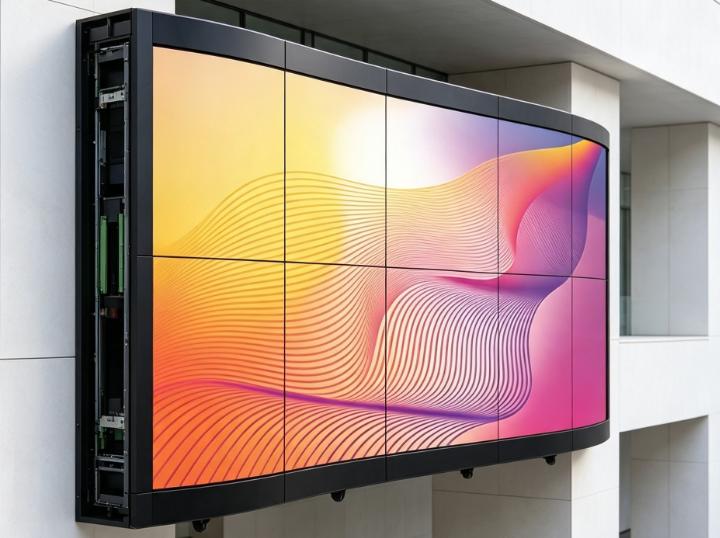
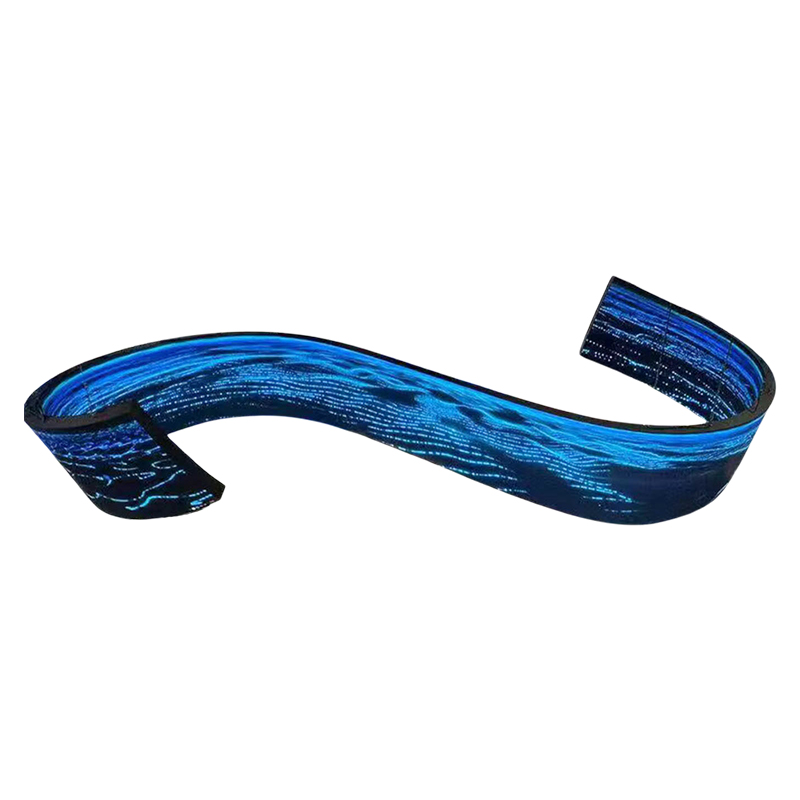
平面LEDウォールは簡単に設計できますが、多くの小売店の内装、アトリウム、美術館、ブランドファサードは平面ではありません。重要なのは、フレキシブルパネルが曲がるかどうかではなく、設置後も曲がり具合、メンテナンスの容易さ、画質、支持構造が予測可能な状態を維持できるかどうかです。この記事では、曲面デザインが高額な妥協案となる前に、その適合性を判断する方法を解説します。 敷地の形状が展示方法を決定する 設置場所の形状を考慮して決定すべきです。なぜなら、正面から見ると見栄えの良いスクリーンでも、端部、接合部、またはサービスポイントで不具合が生じる可能性があるからです。設置面が明確な曲線を描いていたり、不規則な形状をしている場合は、柔軟性のあるLEDスクリーンが役立ちます。 実際の設置面積、使用可能な寸法、視認位置、障害物、および技術者のアクセス状況を記録します。これらの測定値に基づいて、フレキシブルパネル、曲面キャビネット、または小型の剛性部材を確実に設置できるかどうかを判断します。 現場状況 柔軟なアプローチ 確認するポイント 単一の緩やかな弧 湾曲したモジュールまたはフレキシブルパネル 最小半径と支持間隔 密閉された円筒または柱 柔軟なモジュールまたはソフト接続モジュール 継ぎ目の連続性とケーブルのクリアランス 曲線と角が混在 カスタム形状のセクション 遷移形状とサービスアクセス 特徴的な曲線が1つある平らな壁 ハイブリッド型の剛性および柔軟性のあるレイアウト システム間の連携 半径は機械的な限界であり、設計上の提案ではありません。 すべてのフレキシブルLEDディスプレイには、機械的な限界として扱うべき曲げ範囲が規定されています。この範囲を超えると、応力、継ぎ目の不均一、または部品の損傷が発生する可能性があります。表面、留め具、ケーブル、保護材を含むアセンブリ全体に対して、曲げ半径を確認してください。 「湾曲」という言葉は、実に様々な結果を指す可能性があります。広い弧を描く場合は湾曲した筐体が適しているかもしれませんが、狭い柱状の形状の場合は、柔軟な接続部と異なる支持方法が必要になるかもしれません。どのLEDディスプレイ構造が適切かを判断するには、単に「湾曲」と表現されているという事実だけでなく、実際に測定した形状に基づいて判断する必要があります。 柔軟なモジュールが特定の視覚的問題を解決します 柔軟なLEDディスプレイは、表示面が変化する建築形状に沿う必要がある場合に有効です。柔軟な配線接続により、モジュールは完全に剛性の高いアセンブリよりも曲面や不規則な表面に沿って柔軟に動くことができ、セクション間のより一貫した位置合わせを維持するのに役立ちます。 ディスプレイが湾曲した受付壁、柱を覆うように設置されたり、彫刻的な装飾として用いられたりするなど、空間の一部となっている場合に、その効果は最大限に発揮されます。ただし、デザインには安定した裏打ちと明確な交換経路が必要です。 フレキシブル接続でも、慎重な設置が必要です ソフトワイヤリング接続においても、ケーブルの配線整理、適切なストレインリリーフ、明確な識別は不可欠です。ケーブル管理が不十分だと、コネクタに不要な負荷がかかり、保守作業が複雑化し、信号や電源接続が不安定になるリスクが高まります。 承認前に以下の管理事項を確認してください。 図面に曲げ方向と最小半径を記入してください。 ケーブルに十分な余裕を持たせて、動きによってコネクタに張力がかからないようにしてください。 LEDモジュールが荷重を支える要素として使用されないように、支持構造を定義してください。 トリムや周囲の備品の裏側など、モジュール交換のためのアクセス経路を確保してください。 最も半径の小さい部分と、最も目立つ継ぎ目をテストしてください。 これらの管理機能により、土壇場での現場調整ではなく、柔軟な対応を継続的に行うことが可能になります。 画質はカーブだけでは決まらない 最終的な画質は、画素ピッチ、視聴距離、キャリブレーション、処理、コンテンツ、およびジオメトリによって決まります。近距離で見ると継ぎ目が目立つことがありますが、遠距離で見ると消えます。また、カメラによっては、目には分かりにくいリフレッシュレートやスキャンに関連するアーティファクトが発生する場合があります。 曲面スクリーンでも、一貫したキャリブレーション基準は依然として必要である キャリブレーションは、再現可能な基準点から始まります。曲面設置を評価する前に、モジュールの順序、ピクセルマッピング、受信カードの構成、および輝度の一貫性を確認してください。回転したり、マッピングが誤っている部分は、角度が変化するにつれて診断が難しくなる場合があります。 ワークショップと引き渡し時には、同じテストコンテンツを使用してください。ニュートラルグレーのテストパターンは輝度の不一致を明らかにし、暗いグラデーションは低レベルの均一性の問題を明らかにし、細かいテキストはマッピングや位置合わせのエラーを特定するのに役立ちます。側面を含む主要な表示位置からテストを実施してください。 連続曲げよりもカスタム形状の方が優れている場合 特殊な形状のLEDディスプレイは、円形、球形、直角の遷移、あるいは単一の曲げでは対応できない変化する輪郭などに最適です。このプロセスは、正確な図面と、ディスプレイ面、フレーム、および構築構造の明確な区分から始まります。 BLC LEDは、円弧、円、柱、球、立方体状構造など、様々な形状に対応できる柔軟で創造的なディスプレイシステムを提供しています。 ハイブリッドレイアウトはリスクを軽減できる 壁の一部のみに湾曲したディスプレイが必要な場合、ハイブリッドレイアウトは複雑さを軽減できます。平坦な部分は剛性のあるキャビネットで覆い、形状が湾曲を必要とする部分のみに柔軟性のあるモジュールまたはカスタム形状のモジュールを使用します。えーと。 システム間の境界をテストします。ピクセルピッチ、筐体の奥行き、キャリブレーション、視野角、およびサービスアクセスを確認し、視覚的にも機械的にも一貫性のある移行を実現します。 曲面LEDプロジェクトのための実践的な承認プロセス 承認にあたっては、以下の4つの質問に答える必要があります。正確な形状は何か?どの構造が機械的限界内に収まるか?画像はどのようにテストされるか?技術者は故障したモジュールをどのように交換するか?測定図面、半径マップ、支持コンセプト、ケーブル経路、サービスクリアランス、テスト結果を含む簡潔な承認パッケージを用意してください。 最適なフレキシブルディスプレイは、設置場所とワークフローに合わせて設計されます。 適切なフレキシブルディスプレイは、複雑なメンテナンス作業を発生させることなく、測定された形状に沿う必要があります。フレキシブルモジュールは予測可能な曲線に適しており、カスタム形状のセクションは変化する輪郭に効果的です。また、ハイブリッドレイアウトは、必要な特殊な構造物の量を削減できます。形状、サポート、サービスアクセス、画像テストをまとめて検討することで、より幅広いLEDディスプレイソリューションを明確な要件に基づいて検討できます。 よくある質問 フレキシブルLEDスクリーンは何に使われるのですか? フレキシブルLEDスクリーンは、ディスプレイを曲面、円筒形、または不規則な形状の表面に適合させる必要がある場合に使用されます。特に、建築物、小売店の内装、展示会、ブランドスペースなど、平面の長方形では隙間が生じたり、意図した形状が損なわれたりする場合に有効です。 曲線がきつすぎるかどうかは、どうすればわかりますか? 設置全体における最小半径を測定し、選択したパネルまたはキャビネットの承認済み曲げ範囲と比較してください。この確認には、裏板、コネクタ、ケーブルの動き、および固定方法を含めてください。視覚的なモックアップを機械的適合性の証明として扱わないでください。 フレキシブルLEDディスプレイは屋外での使用に適していますか? 適合性は、製品の保護等級、材質、輝度、熱設計、設置方法によって異なります。屋内用フレキシブルLEDディスプレイは、屋外環境に適合するとは限りません。設置予定場所の環境仕様とサポートの詳細をご確認ください。 引き渡し前にテストすべき事項は何ですか? グラデーション、細かい文字、暗いコンテンツ、動き、ニュートラルグレーなど、信号経路全体をテストします。メインの視聴ゾーンからの継ぎ目をチェックし、マッピングとキャリブレーションを検証し、最終アクセス経路がまだ利用可能なうちにモジュールの交換試験を実施します。
17th 9月 2026

屋内用LEDビデオウォールをクリアな状態に保つにはどうすればよいか?

A lobby screen has only a few seconds to do its job. Visitors should be able to read a welcome message, find an event, or recognise a brand without stepping back, squinting, or waiting for an animation to finish. That practical test is a better starting point for an indoor display than a long feature list. Clarity begins with the visitor’s stopping distance Viewing distance is the first control on whether an image looks intentional or merely bright. In a reception area, people may pause close to the screen, walk past it at an angle, or look up while checking in. An indoor LED display screen must therefore make its smallest important text readable from the nearest realistic position, not just look impressive from across the room. Pixel pitch matters because it sets how much image detail can be formed within a given area. A smaller pitch can support finer detail at close range, but it does not rescue an overcrowded message or a poorly placed screen. Treat pitch as part of a reading-distance decision: map the closest standing point, the usual walking route, and the farthest point where the message still has to work. The nearest viewer sets the hard limit The nearest viewer often reveals problems that a wide room view hides. Small text can merge into a gray band, and diagonal graphics can look rough when the image is asked to carry more detail than the screen and distance can comfortably deliver. For that reason, a scale test should use the smallest real-world item that matters. Put the actual reception message, QR code, menu, or wayfinding arrow on a trial canvas. If it is not comfortably readable at the closest intended position, simplify the content or revisit the display plan before moving on to cabinet details. Message hierarchy keeps the wall useful Good lobby content gives the eye one clear task at a time. A screen can carry several messages through the day, yet each frame should make its main message obvious before a visitor has time to look away. This is where an indoor LED video wall earns its space: it can create a continuous canvas, but only if the content respects the way people actually pass through the room. Build each scene around a simple hierarchy: One primary message, such as a welcome, direction, or event name. One supporting detail, such as a time, floor, or short callout. Clear contrast between text and its background. Enough empty space that the message does not compete with decorative motion. Movement should support the message instead of delaying it. Slow, purposeful transitions can make a wall feel alive, while rapid looping effects make text harder to catch for people who enter mid-sequence. A clear first frame is especially valuable in a lobby, where most viewers will not wait for a second chance to read it. Light around the screen changes the result Ambient light affects whether contrast remains comfortable and legible. A wall facing glass, reflective stone, or a bright entry zone may need a different brightness setting from the same wall placed deeper inside the building. The useful target is readable contrast without turning the display into the brightest object in a space meant for conversation or arrival. The installation plan should also allow content calibration. Test a representative colour palette and a plain background during commissioning, then record the agreed settings for future updates. Lobby situation What visitors need to see A practical content response Close check-in point Names and directions Large type, short lines, stable first frame Long approach corridor One recognisable message Strong shape, limited copy, high contrast Waiting area Longer story or programme Slower sequence with clear scene changes A service route protects the visual standard Maintenance access affects clarity long after installation day. A screen that is difficult to reach can leave a failed module, a colour mismatch, or a damaged surface in view for longer than anyone planned. Front or rear access should follow the available building space and a safe component-removal path, not an assumption made after the wall is framed. This is also where a project team can connect visual goals to the actual product structure. BLC LED’s Indoor BT Series uses a rigid 640 x 480 format with high-precision construction, system-backup support, and a hard-wired HUB connection. For a fixed indoor LED screen wall, those features are relevant when the brief calls for orderly alignment and a dependable display path, rather than simply adding specifications to a proposal. The handover should identify the approved brightness profile, common content layouts, the safe service direction, and the steps for checking a replacement module against the surrounding image. Those details help a facilities team restore the intended look under pressure. The screen and the message need one final rehearsal A finished installation should be tested as visitors will use it, not only as technicians see it. Walk the entrance route, stand at the check-in point, and test the welcome line, directional information, and short branded sequence. This rehearsal also exposes whether an indoor LED display is carrying too much. If visitors need to stop and decode the wall, reduce the copy, enlarge the primary message, or break the information into scenes. An indoor advertising LED display screen works best when it gives people a useful cue quickly, then lets the architecture and service experience do the rest. Summary An indoor wall stays clear when the plan begins with the closest viewer, gives every frame a clear message hierarchy, and preserves the image through a realistic service route. For lobby projects, the next decision is not which specification sounds largest; it is whether the proposed screen and content work together at the exact places visitors will stand and move. FAQ Does a smaller pixel pitch always make lobby content better? A smaller pitch can improve close-range detail, but content hierarchy still matters. Large, well-spaced text and clear contrast are often more valuable than adding detail that the message does not need. What content should an indoor LED video wall show first? Show the message a visitor needs immediately, such as a welcome, direction, or event name. Place secondary details after the main message is already clear. Can an indoor LED screen wall handle both branding and wayfinding? Yes, provided the two purposes do not compete in the same moment. Use short wayfinding scenes when visitors need direction, then return to brand content when the screen has more time to tell a story.
3rd 9月 2026

1台のLEDレンタルスクリーンで、さまざまなステージに対応できるのはなぜでしょうか?

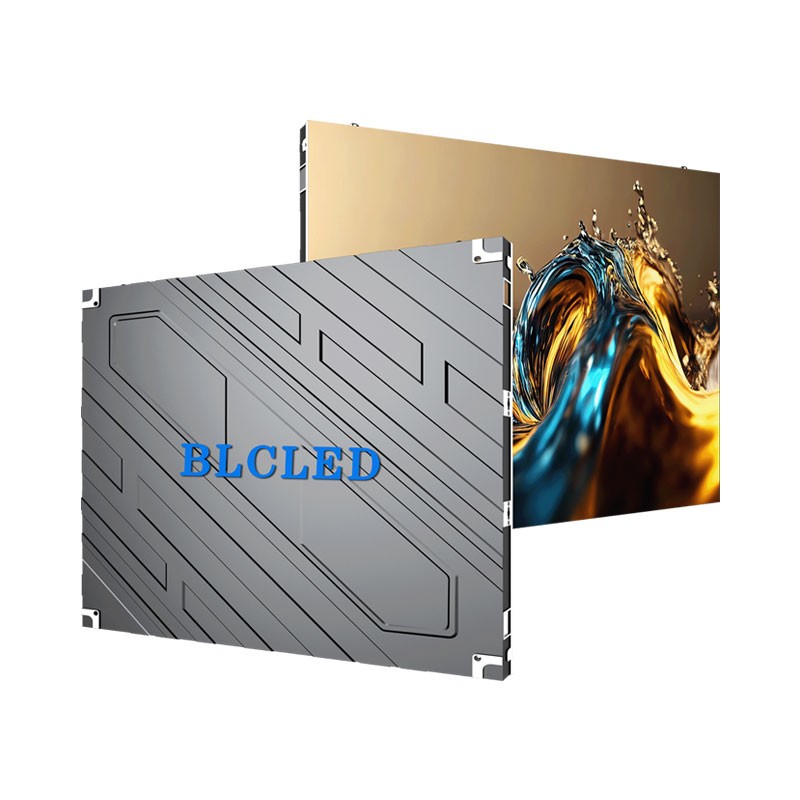
A rental screen earns its place when it moves between stage designs without forcing the crew to relearn the system. A keynote may need a wide wall, while the next show calls for wings, a corner, or a curve. The practical question is whether those shapes can be built predictably with one disciplined workflow. Flexible Inventory Depends on Repeatable Geometry An LED rental screen becomes versatile when cabinet sizes, locks, service access, and signal paths work as one platform. Unrelated cabinets multiply spare-part decisions and assembly habits. A useful system limits those changes while preserving layout flexibility. Panel Sizes Should Solve the Layout Math Stage drawings rarely share one set of proportions. A 500 x 500 mm cabinet gives finer edge control, while a 1000 x 500 mm cabinet reduces handling across a large rectangle. The useful mix reaches common dimensions without creating rarely used panels. This is where a defined rental family becomes relevant. BLC LED’s BP series includes 500 x 500 mm and 1000 x 500 mm indoor panel options. Its high-precision die-cast enclosure supports quick, accurate assembly, so the cabinet platform follows the layout plan. Curves Need a Known Angle and Radius A curve is dependable only when the drawing and cabinet mechanism describe the same geometry. The BP platform supports 45-degree inner and outer curves, and eight cabinets can form a 1.25-meter-diameter circle in the specified configuration. That makes a curved LED screen a planned shape rather than an improvised bend. The radius must still be confirmed for the exact model, connectors, and supporting structure. Cabinets with the same outside dimensions do not necessarily share curve hardware or load paths. Indoor and Outdoor Shows Need Separate Configurations LED screens for events may share a modular appearance, but a ballroom and an open-air festival create different conditions. The inventory plan can preserve one workflow while keeping environmental specifications separate. Indoor and outdoor cabinets should not be treated as interchangeable. Brightness Follows the Venue, Not the Largest Number Indoor BP models provide 600 or 800 nits depending on pitch, while outdoor BP models provide 3,500 to 5,000 nits. Indoor output must work with controlled lighting and cameras; an outdoor stage may need more headroom against daylight. Protection ratings also separate the groups: indoor BP models are IP31, while outdoor BP models are IP65. Naming and packing logic can remain familiar without assigning one configuration to every venue. Viewing Distance Sets the Useful Pixel Pitch Pixel pitch should follow the nearest important viewing position and the level of detail in the content. The BP indoor range covers P1.56 through P3.91, while the outdoor range covers P1.95 through P4.81. A smaller pitch supports closer viewing, but screen size, processing, and budget still matter. A stage rental LED screen therefore needs a layout record with physical dimensions and the expected audience zone. A drawing without its viewing assumptions may fail at the next venue. Fast Changeovers Come From Standard Work Changeover speed depends on decisions made before loading. Cabinet labels, cable maps, controller files, spare locations, and packing order should match the drawing. Stable details let the crew focus on what is genuinely different. A practical show file should contain: A cabinet map with row, column, and curve positions. Power and data routes that match labeled cables. A controller preset named for the event and screen. A spare plan for compatible modules, cabinets, and tools. A quarantine rule for damaged parts. One Repair Should Be Rehearsed Before Show Day Service access matters because a fast build is incomplete if a failed section cannot be reached. BP rental cabinets support front and rear maintenance. The plan should identify which side remains accessible after scenery, speakers, and barriers are installed. A useful rehearsal follows one fault from identification to a restored image. The crew locates the cabinet, isolates power and data, replaces the approved part, confirms alignment, and returns the removed item to a marked case. This exposes missing tools or blocked access before show day. Image Consistency Must Survive Reassembly A rental wall is repeatedly rebuilt, so visual acceptance must be repeatable too. BP indoor and outdoor models list a 3,840 Hz refresh rate with configuration-specific gray levels. The finished image also depends on calibration, controller settings, content, and cameras. An LED wall for events should be checked with demanding content, not only a bright promotional loop. Dark gradients can expose low-level differences, thin text can reveal mapping errors, and side views can reveal a poor joint. A Repeatable Test Scene Makes Acceptance Faster The same test sequence should be used from warehouse preparation through handover. It can include gradients, neutral gray, skin tones, saturated colors, fine text, fast motion, and a controlled full-white check. Camera operators should test frame rate and shutter settings before doors open. The purpose is to separate normal venue differences from mapping, calibration, assembly, or signal faults. The Best Rental System Is the One the Crew Can Repeat One LED rental screen can serve different stages when its flexibility is defined. Repeatable geometry handles flat walls, wings, corners, and curves; separate indoor and outdoor configurations preserve suitability for each venue; and standard show files simplify changeovers. Compare the layouts used most often and confirm which cabinet mix covers them with the fewest exceptions. Share recurring stage drawings, viewing zones, rigging limits, and changeover timing through our project details page. BLC LED can then match the BP platform to the layouts your crew builds. FAQ Can One Rental Platform Be Used Indoors and Outdoors? One platform may offer indoor and outdoor models, but they are not identical. Brightness, protection, power behavior, and operating conditions must match the venue. Which Cabinet Size Works Best for Changing Stage Layouts? A 500 x 500 mm cabinet offers finer control around edges and curves, while a 1000 x 500 mm cabinet reduces handling across large flat areas. The best mix covers recurring drawings without creating rarely used combinations. Can Rental Panels Form a Curved Stage Wall? Yes, when the cabinet includes defined curve hardware. The BP series supports 45-degree inner and outer arcs in its specified configuration. Confirm the radius, connectors, support method, and model before approval. Is a 3,840 Hz Refresh Rate Enough for Live Event Video? A 3,840 Hz refresh rate is a strong foundation, but it does not guarantee every camera result. Gray-level performance, controller settings, camera frame rate, shutter settings, and exposure also matter. Test the full signal chain.
27th 8月 2026

屋外用LEDスクリーンの運用コストの計算方法

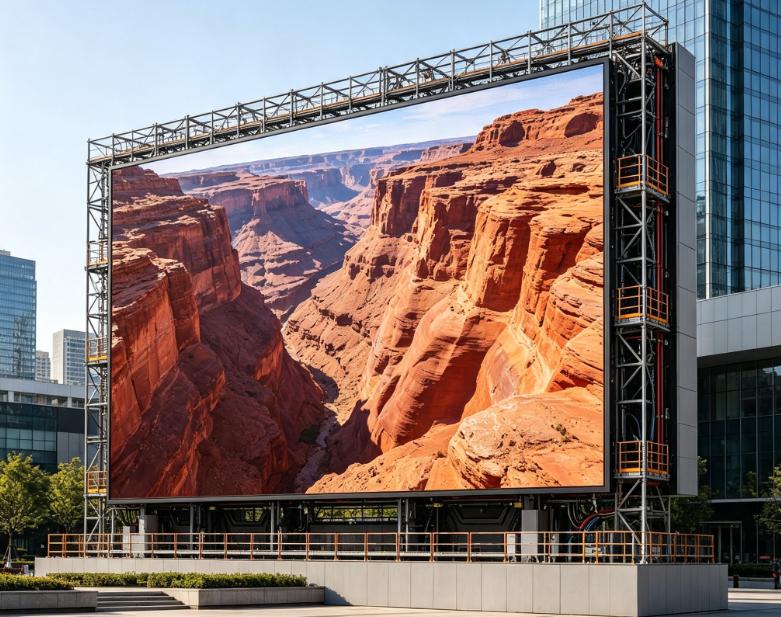
The purchase price is only the first bill attached to an outdoor display. Electricity, maintenance access, spare parts, and lost advertising time can quietly cost more over the screen’s working life. The useful buying question is therefore simple: which configuration will deliver the required visibility at the lowest realistic annual operating cost? The answer comes from modeling the site, not from choosing the lowest quotation. Put Every Recurring Cost on One Annual Line An outdoor LED screen needs a simple cost model before it needs a product comparison. Add annual electricity, planned maintenance, expected repair labor, access equipment, replacement parts, and the value of likely downtime. Keep installation and purchase costs separate so a cheap cabinet cannot hide an expensive service route. The calculation only needs to expose assumptions and make competing proposals comparable. Cost driver Evidence to collect Annual calculation Electricity Average draw at realistic brightness kW x operating hours x tariff Routine service Visit frequency and crew size Visits x labor and access cost Corrective repair Likely interventions and parts Events x labor, access, and parts Downtime Time to diagnose and restore Lost hours x value per active hour Separate Average Draw From Maximum Load Maximum power helps size electrical equipment, but average power is the better starting point for an energy budget. Content, brightness, and operating hours change actual consumption. Ask bidders to state both figures under defined conditions and compare one scenario. Our Outdoor Ti Series offers an average-power range of 100-200 W/m2 and a maximum range of 650-750 W/m2, depending on configuration and operating conditions. Those ranges are not an electricity bill by themselves. Apply the expected screen area, daily schedule, local tariff, and brightness profile to estimate one. Give Downtime a Financial Value Downtime becomes measurable when the operator values each unavailable hour. For a roadside billboard, that may be contracted media time; for a venue, a disrupted event. Even a rough value shows why fast diagnosis and accessible components can outweigh a small purchase discount. Match Brightness to the Site, Hour by Hour Brightness should follow ambient light rather than remain fixed at its daytime setting. Running an outdoor LED display harder than the site requires wastes electricity and can make nighttime content uncomfortable. The target is sufficient contrast, with lower output when conditions allow. Build a Usable Operating Profile A realistic profile separates full sun, overcast periods, dusk, night, and closed hours. Operators can then test changes without weakening the display’s purpose: Schedule the screen off when there is no audience or contracted content. Use lower brightness settings when ambient conditions allow. Avoid large white backgrounds when the campaign design can work with darker scenes. Review settings seasonally instead of leaving commissioning values untouched. Our Outdoor Ti Series provides model-dependent brightness options from 5,000 to 10,000 nits. The correct setting depends on orientation, shade, local rules, viewing distance, and content. A specification ceiling is capacity, not an all-day setting. Design One Common Repair Before Approving the Structure Maintenance cost is often decided by the steelwork and access route. An LED advertising screen that requires a lift, lane closure, or large crew for a module change will repeat that burden at every visit. The cheaper direction is the one technicians can use safely on site. Compare the Same Module-Swap Scenario Ask each bidder to describe one repair from fault alert to restored image. Count diagnosis, travel, access equipment, crew, removal, replacement, alignment, and testing. This turns “easy maintenance” into a sequence that can be priced. Our Outdoor Ti cabinets support both front and rear access, allowing the service direction to follow the installation. Front access can be useful where there is limited or no usable space behind the screen. Rear access can remain practical when a safe corridor already exists. Neither option is automatically cheaper; the surrounding structure and repeated labor decide the result. A waterproof LED display still needs serviceability. Our Outdoor Ti Series is rated IP65, but technicians must protect seals, connectors, and drainage paths whenever a cabinet is opened. Include those checks in the repair method. Buy Evidence That Protects the Cost Model A forecast is useful only if the delivered screen behaves like the proposal. Before shipment, verify consistent operation, module alignment, controls, and the agreed service procedure. Product verification should protect the cost model, not become a list of claims. At BLC LED, our quality-control process includes incoming inspection, in-process control, finished-product testing, and a 72-hour burn-in test. For a large outdoor LED video wall, the acceptance review should also reproduce the intended brightness schedule, check power readings, confirm front or rear removal, and record the controller configuration. A documented pre-shipment verification can help catch an expensive mismatch before freight and site labor make correction harder. The handover should include labeled spares, configuration backups, maintenance instructions, and fault-escalation contacts. These items shorten diagnosis and help the operator update the model with actual data. Use a Cost Rule That Remains Useful After Installation The best decision is the configuration with the lowest credible annual cost while meeting visibility, safety, and uptime needs. Compare average power under one operating profile, price one common repair, value downtime, and verify those assumptions before shipment. After launch, review electricity and service records quarterly; the model should become more accurate as the operator learns how the site behaves. For a project-specific comparison, share the screen area, location, operating schedule, access constraints, electricity tariff, and uptime target through our project contact page. We can map those inputs to an outdoor configuration without treating maximum specifications as everyday requirements. FAQ How Do I Estimate Annual Electricity Cost? Multiply expected average power in kilowatts by annual operating hours and the local electricity tariff. Use a day-and-night brightness profile instead of maximum power, which is mainly relevant to electrical-system sizing. Does Lower Brightness Always Mean Lower Operating Cost? Lower output generally reduces energy demand, but brightness must still protect visibility and the commercial purpose of the screen. The useful saving comes from matching output to ambient light and active audience hours. Is Front Service Always Cheaper Than Rear Service? No. Front service can avoid a rear corridor and shorten some repairs, while rear service may be efficient where safe access already exists. Price the same repair scenario for the actual structure before deciding. What Should a Pre-Shipment Test Cover? The test should cover image uniformity, controller settings, power behavior, brightness control, component removal, reassembly, and the agreed fault-recovery steps. Record the accepted configuration for site commissioning. How Often Should the Cost Model Be Updated? Review it quarterly during the first year, then at a frequency that matches operational change. Update actual energy use, service labor, parts, access costs, downtime, tariffs, and operating hours so future decisions use site evidence.
20th 8月 2026

不規則な形状のLEDディスプレイはどのように建築に適合するのか

Introduction An irregular LED display fits architecture when its geometry, pixel layout, support structure, service access, and content are engineered as one system. Buyers should start with drawings and viewing conditions rather than selecting a standard cabinet first. This approach helps a custom screen follow curves, corners, columns, or sculptural forms while giving architects, contractors, advertisers, and integrators a clear basis for comparing proposals. Why Standard Rectangles Create Design Conflicts A conventional rectangular screen works well on a flat wall, but it can force awkward framing around curved or three-dimensional surfaces. An irregular LED display becomes part of the architectural form. It may wrap a column, turn a corner, form a ring, or create a freestanding object. Geometry Must Be Defined Before Cabinet Selection Accurate geometry is the first control point for a custom LED display. The supplier needs overall dimensions, radius, angle changes, mounting points, tolerances, and required openings. A curved LED screen designed from an approximate radius can produce gaps or stress modules and frames. Clear drawings show whether an angled cabinet, flexible module, or purpose-built enclosure is practical. Content Must Follow the Physical Surface Content planning is the second control point because unusual shapes change how images are viewed. A flexible LED display wrapped around a cylinder needs a different pixel map from a flat canvas. A creative LED display shaped as a sphere, cube, or disc needs safe zones for logos and text. Request a content template before production so the media team can test graphics across seams, corners, and curves. Match the Display Structure to the Shape The right structure depends on whether the form is curved, sharply angled, three-dimensional, fixed, or frequently moved. A custom LED display can be produced as arcs, circles, spheres, cubes, and other tailored forms, with dimensions adjusted to project requirements. BLC LED also supports modules that can follow highly curved surfaces. Flexible Modules Suit Continuous Curves A flexible LED display suits a smooth, continuous bend or non-flat substrate. The project still needs a stable support surface, accurate module alignment, organized power and signal routing, and a realistic maintenance method. Flexible modules do not replace structural engineering. Angled Cabinets Suit Repeatable Facets An angle-adjustable cabinet can suit repeatable facets, inner curves, or outer curves. BLC LED rental BP cabinets can form 45-degree inner and outer arcs with precision joints. This approach gives a curved LED screen predictable alignment, especially when it must be dismantled and rebuilt. The final choice should follow the radius and transport plan. Use these practical distinctions during concept review: Choose flexible modules for smooth curves and closely integrated surfaces. Choose angled cabinets for repeatable radii, faceted forms, or rental use. Choose purpose-built frames for spheres, cubes, discs, counters, and branded objects. Confirm the support structure before approving the visual design. Engineer Maintenance Before Fabrication Maintenance access is easiest to solve before frame manufacture. A creative LED display may look clean yet become difficult to operate if technicians cannot remove a module, power supply, or receiving card. Wall-flush, recessed, cylindrical, and sculptural installations often favor front access because rear space may not exist. Freestanding structures may allow rear access when a safe route is built into the frame. Specify a Component-Removal Path A maintenance plan should show how each serviceable part reaches the technician. For a curved LED screen, it must also protect neighboring modules during removal. Ask for the tools, access direction, cable clearances, spare-part position, and realignment steps. This evidence is more useful than a general promise of easy maintenance. Build a Complete RFQ Package A strong request for quotation reduces assumptions and makes supplier proposals easier to compare. Send the same project information to every bidder: Dimensioned architectural drawings, radius, angles, and mounting points. Intended indoor or outdoor location and expected viewing distances. Required shape, active display area, and preferred pixel pitch. Front-service or rear-service constraints and available working space. Content sources, playback formats, control method, and pixel-map needs. Packing, installation, commissioning, training, spares, and support expectations. This RFQ package separates a production-ready proposal from an attractive concept with unresolved engineering details. It also improves discussions about quality, risk, and operating effort. Verify Manufacturing and Quality Control Manufacturing control matters because dimensional errors can repeat across an entire custom LED display. BLC LED integrates research and development, production, sales, and service, supporting coordination from drawings through assembly. Its documented process includes incoming, in-process, and finished-product inspection, plus a 72-hour burn-in test before shipment. A pre-shipment review should confirm geometry, seam consistency, playback, controller configuration, and service procedure. For a shaped installation, assembly photos, video, or remote inspection can reveal mapping errors before international transport. Buyers should also request labeled packing and an installation sequence matching the approved drawings. Request an Engineering Review A workable design starts with accurate project inputs. Share your drawings, viewing distances, installation conditions, service constraints, and content requirements with BLC LED to discuss a creative LED display solution. The engineering review can then compare flexible modules, angled cabinets, and purpose-built structures before the shape and quotation are finalized. FAQ Can an Irregular LED Display Follow Any Shape? An irregular LED display can support arcs, circles, spheres, cubes, discs, counters, and other custom structures. Feasibility depends on radius, module size, structural support, viewing direction, service access, and content mapping. Is a Flexible LED Display the Same as a Curved Screen? A flexible LED display is one way to create a curve; another is an angle-adjustable cabinet or custom frame. The suitable method depends on continuous bends, repeatable facets, portability, and permanence. How Should Buyers Select Pixel Pitch for a Creative LED Display? A creative LED display should use a pixel pitch matched to viewing distance, content detail, surface geometry, and budget. Review simulated content at realistic scale because text and fine graphics behave differently across corners and curves. How Should a Curved LED Screen Be Maintained? A curved LED screen should have a documented front- or rear-service route, suitable removal tools, labeled cables, accessible spare parts, and an alignment procedure. The maintenance method should be tested during factory assembly rather than decided after installation.
13th 8月 2026
家
WhatsApp
メール
連絡先